New Concrete Driveways From Local Providers
Request an estimate for your driveway
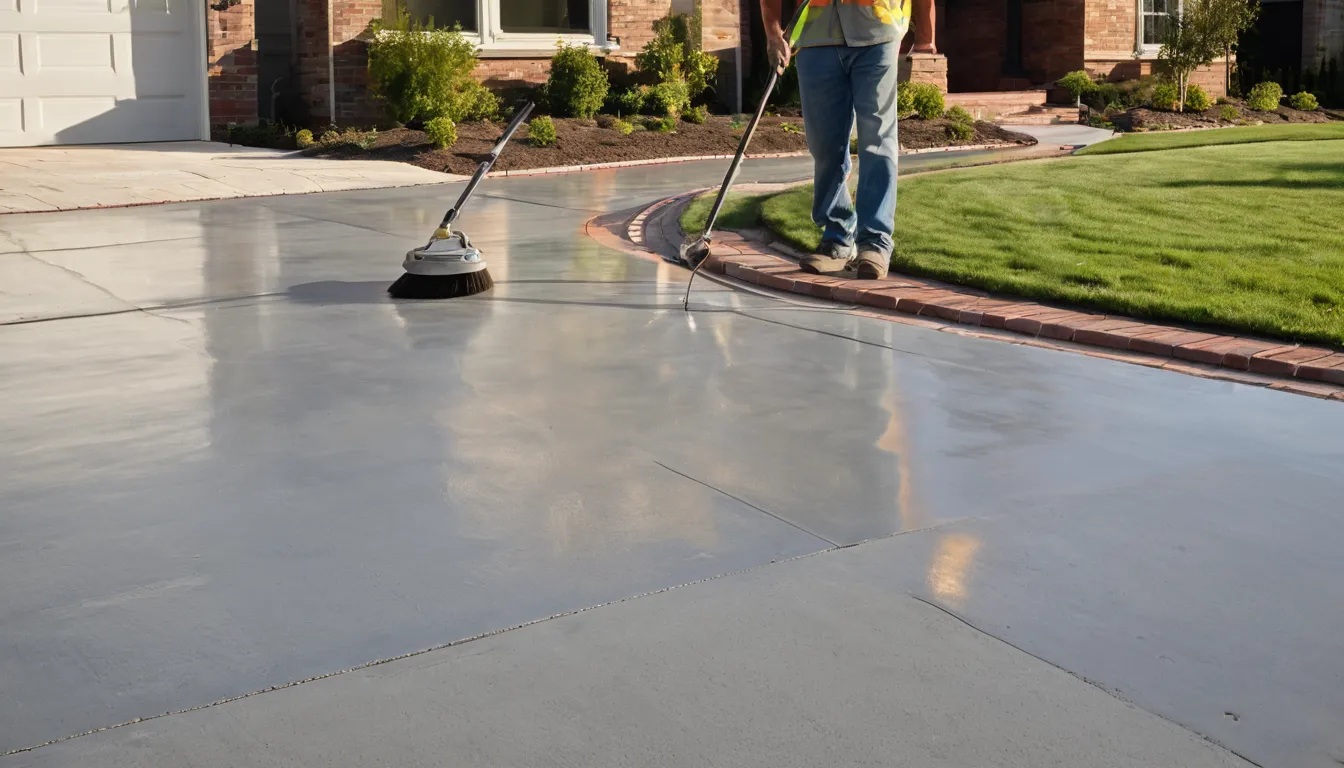
A new concrete driveway is a big job. It sets the look of your home and carries your cars for decades. Novtrq Concrete does not pour it. We are a referral service. You send a request, and we pass it to an independent provider in our network who works near you.
That is the whole model, and we say it up front. The provider gives you the quote, sets the schedule, and does the work. We do not. Our job is to make the first step easy. Below you will find signs your old slab is done, what a new driveway includes, rough costs, and care tips for hard winters.
Do you need a new concrete driveway?
Short answer: if the slab is broken, sunken, or holds water, replace it. Patching a failing driveway only buys a little time.
Here is why. Concrete does not heal itself. Once water gets in, frost pushes it apart every winter.
Who does what
We refer. They pour. Novtrq Concrete is a referral service. An independent provider in our network does the work, signs the quote, and answers for the job. We only connect you.
Signs your driveway is done
- Cracks wider than a pencil, or cracks that run across a whole panel
- Slab sections sitting at different heights
- A crumbling, flaking, or pitted top layer
- Puddles that stay after the rain stops
- A gap forming where the drive meets the garage floor
One or two of these may be fixable. Three or more usually mean the base under the slab has failed.
What about concrete driveway repair?
Many people search for concrete driveway repair first. Hairline cracks can often be sealed. That is a small job. This site is for new driveways and full replacements, so patch-only work is a different request.
Why cold and wet climates are hard on slabs
Deep frost, thaw, and freeze again. Spring flooding soaks the ground under the slab. Hot, humid summers add stress. Hail and storms rarely hurt good concrete, but runoff from them can wash out a weak base. A solid base and good drainage matter most.
What a new driveway project includes
Most full jobs follow the same path. Your provider will confirm the details in writing.
Tear-out and haul-away
The old slab is broken up and hauled off. Bad soil under it is dug out if needed.
Base and grading
Crushed stone goes down and gets packed tight. The grade is set so water runs off the slab, not toward the house.
Forms, steel, and joints
Wood forms hold the shape. Rebar or wire mesh can add strength. Control joints are cut or tooled in so cracks form along planned lines, not random ones.
The pour and finish
Concrete is poured, leveled, and finished. A broom finish gives grip when wet or icy. It is plain, and it works.
Size, thickness, and finish
Start with how you use the drive. A single lane is often 10 to 12 feet wide. A two-car drive is often 18 to 24 feet. Add room for turning if you can.
For thickness, 4 inches is common for cars. Heavy trucks or RVs call for 5 to 6 inches. Ask your provider about air-entrained concrete. It handles freeze and thaw better.
Stamped patterns and colors are options too. They have their own page, so ask about them in your request.
Permits and the street apron
Many towns want a permit for a new driveway. The apron is the part between the sidewalk and the street. It is often owned by the town and may have its own rules for width and thickness.
A local provider usually knows how this works nearby. Still, check with your town. Get the permit details in writing.
Drainage and your foundation
Water should run away from your house. A slope of about a quarter inch per foot is a common target. This matters most with full basements and sump pumps. A driveway that sends water toward the wall makes your pump work harder.
If you already see wet basement walls or a slab tilting toward the house, talk to foundation repair experts first. That is a separate trade. Fix the foundation, then pour new flatwork.
Choosing a concrete provider
Ask each provider the same questions so quotes are easy to compare.
- Is the quote written, with slab size, thickness, and base depth?
- Do they carry insurance, and can you see proof?
- Will they pull the permit or leave it to you?
- What is the plan for joints and drainage?
- How long until you can drive on it?
A clear, patient answer is a good sign. A vague one is not.
After the pour
New concrete needs care in its first weeks. Your provider will give exact times. Use these as a rough guide.
The first week
Keep off the slab for a couple of days. Keep cars off for about a week. Keep heavy trucks off for about a month. Do not let kids or pets mark the surface.
Seal it, drain it
Seal the slab once it has cured, as your provider advises. Then point downspouts and sump lines away from the drive. Sealer blocks water. Drainage moves it away. You need both.
Your first winter
Skip deicing salt in the first winter. Use sand for grip. Shovel with a plastic blade, since metal can chip the edges.
Each spring
Walk the drive after the thaw. Look for new cracks and worn joint sealant. Small fixes now stop big ones later.
Request a callback to check provider availability, or send a request and let a local provider reach out.
What's Included
Old slab removal
Breaking up the old concrete, hauling it away, and digging out soft soil beneath it.
Base and grading
Packed crushed stone and a slope that sends rain away from your house.
Forms and reinforcement
Wood forms, steel where needed, and control joints placed to guide cracks.
Pour, finish, and cure
Concrete is placed and finished, then protected while it hardens properly.
Typical new driveway costs in the U.S.
Prices change with region, slab size, access, and soil. These are typical U.S. ranges only. Always get a written quote from the provider before work starts.
| Item | Typical range | Notes |
|---|---|---|
| Plain concrete driveway | $6 – $12 per sq ft | Broom finish, standard thickness, basic prep |
| Two-car driveway (about 500 sq ft) | $3,500 – $7,500 | Varies with thickness and site access |
| Old slab removal and haul-off | $1 – $3 per sq ft | Higher if the slab is thick or heavily reinforced |
| Base and grading work | $500 – $2,500 | Depends on soil, slope, and drainage fixes |
| Color or stamped finish | $3 – $10 more per sq ft | Pattern and color choices change the price |
| Permit and apron work | $50 – $1,000 | Local rules differ; ask your town |
How It Works
Send your request
Tell us about your driveway, its size, and what you want changed. It takes a few minutes.
We pass it along
Your request goes to an independent local provider in our network who handles this type of job.
Review the quote
The provider contacts you, visits if needed, and gives you a written quote to compare.
Provider does the work
If you hire them, they schedule and pour the driveway. You deal with them directly.
Why Call Novtrq Concrete
Plain referral model
We refer. They pour. You always know an independent provider does the work.
Clear first step
One short request form replaces a long search. No obligation to hire anyone.
Local providers
Providers in our network work near you, so they know frost depth and local permit rules.
Care advice
Simple tips on sealing and drainage help new concrete last through hard winters.
Other Services
Need concrete driveways in Rittman?
Tell us about your driveway or patio project. Request an estimate and a local provider in our network will follow up. No obligation.
No obligationConcrete Driveways FAQ
How long does a concrete driveway last?
A well-built concrete driveway often lasts 25 to 40 years. Base prep, thickness, drainage, and sealing all matter. Harsh frost and road salt can shorten that, so regular care helps it last longer.
How long before I can drive on a new concrete driveway?
Foot traffic is often fine after a couple of days. Cars usually wait about a week. Heavy trucks wait longer, often a month. Your provider will give exact timing based on weather and the mix.
Does Novtrq Concrete pour the concrete itself?
No. Novtrq Concrete is a referral service. We pass your request to an independent local provider in our network. That provider gives the quote, does the work, and is responsible for the finished job.
We service you here
Tell us what happened
Tell us about your driveway or patio project. Request an estimate and a local provider in our network will follow up. No obligation.
No obligation